Choir Rehearsal Tracks for Christmas Carols: A Home Guide
Learn what makes effective choir rehearsal tracks for Christmas carols, how to use them at home, and how to send them easily on WhatsApp.
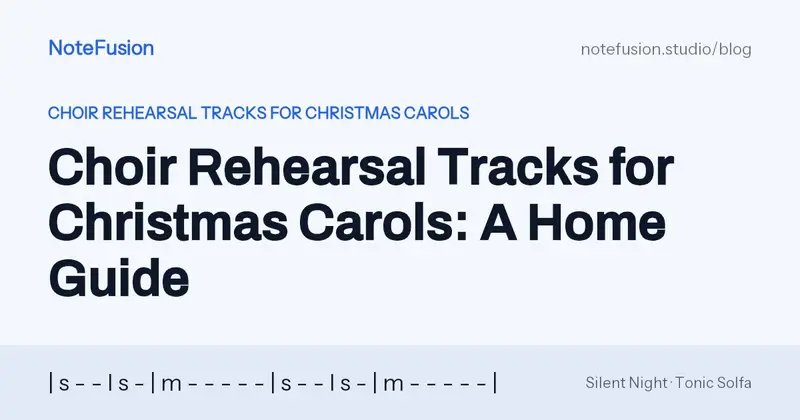
When December arrives and the carol service is only a fortnight away, you likely face the familiar sound of a choir scrambling to learn new harmonies. If your singers struggle to learn their parts during limited rehearsal time, choir rehearsal tracks for Christmas carols are the practical solution. When singers can practise their specific voice part at home between sessions, your weekly rehearsals shift from teaching basic notes to polishing blend, dynamics, and expression.
Over my years as a church musician, I have found that handing out paper sheets is never quite enough for volunteers juggling busy lives. They need to hear what their part sounds like against the rest of the choir before they walk through the church door on Tuesday night. Below is my guide to what makes an effective practice track, how your members should use them at home, and how to distribute them without fuss.
What Makes a Good Part Track?
A good choir rehearsal track for Christmas carols puts the singer's own vocal line forward while keeping the remaining parts quiet in the background. If every voice part plays at the exact same volume, your tenors and altos will simply lean on the soprano melody and miss their own entrances. Balance is everything.
When you prepare audio for a piece like Silent Night, the soprano line should be clear, but the alto, tenor, and bass files must isolate each respective note so singers can tune their intervals. Every track should also begin with a crisp count-in or pitch generator to establish the home note. If you sing carols in traditional keys, ensure the pitch matches your sheet music precisely.
| sSi---llentsnight,- | m_----- | sho---llysnight,- | m_----- |
Got a recording? Get it in solfa →
How to Use Rehearsal Tracks at Home
Having a recording on a phone is only half the battle; singers need a method for home practice. My advice is to teach your choir a three-step routine:
- Listen first without singing: Follow the Tonic Solfa notation with your eyes while the track plays, noting where your line moves by step and where it leaps.
- Sing quietly along: Match your voice to the dominant instrument or vocal line on the track, keeping your tone light so you can hear if you drift.
- Test against the accompaniment: Switch to a version where your part drops out or plays very softly, ensuring you can hold your harmony independently.
For carols with lively rhythms, such as O Come, All Ye Faithful, home practice stops singers from rushing the dotted notes and helps them land securely on every beat.
Balancing the Four Parts of Silent Night
Let us look at how the four SATB parts interact in a classic carol like Silent Night. The melody rests comfortably in the upper voice, while the inner parts supply the harmonic warmth. Altos often have to hold sustained notes while sopranos move above them, which requires careful listening.
| sSi---llentsnight,- | m_----- |
When creating or sourcing tracks, make sure your altos receive a file where their middle harmony stands out above the bass and tenor lines. If your tenors are learning their part separately, they need to hear how their notes sit against the chord root. You can explore more seasonal pieces over on our Christmas hymns and carols collection for more part-specific breakdowns.
How to Send Tracks on WhatsApp
Most choir members check WhatsApp multiple times a day, making it the most reliable delivery system for rehearsal files. To avoid clogging phones with huge audio files, follow these rules:
- Keep files small: Export audio as compressed MP3s or short voice notes so they download instantly on any data connection.
- Name files clearly: Use a naming convention like
Silent-Night-Alto.mp3rather than a random track number. - Send one carol per week: Do not dump ten carols into the group chat at once. Send the specific pieces for the upcoming Sunday so members focus their practice.
You can also include a link to the Hymns index or share direct playback links so singers can view the movable-doh notation right on their screens while they listen.
Fixing Common Home Practice Pitfalls
Even with good rehearsal tracks, singers occasionally run into trouble. Here are three common issues and how to fix them:
- The sliding pitch problem: If your singers sound flat on high notes, remind them to breathe from the diaphragm before entering. Direct them to check their intervals against the starting doh.
- Ignoring the rhythm: Singers sometimes learn the right notes with the wrong time values. Have them tap the steady beat of the colon divisions while listening to the track.
- Over-singing at home: Practising too loudly can strain vocal cords before rehearsal. Tell your choir to sign at half-voice during home practice.
For broader seasonal planning, take a look at our Christmas carol rehearsal plan for choir to structure your December practices effectively.
Generating Custom Tracks for Your Choir
Sometimes your choir sings an arrangement that is not in standard hymnals, or you need to transpose a carol down a tone to suit tired voices in winter. Instead of spending hours recording yourself playing every part on an instrument, you can use technology to streamline the process.
NoteFusion lets you hum a tune, upload a recording, or paste a link from YouTube, Spotify, or Apple Music. The engine instantly writes out the melody in movable-doh Tonic Solfa alongside staff notation. You can play the tune back on a piano at slower speeds, loop tricky bars for section practice, and check whether every part sits comfortably in your choir's vocal range. You can try it out right now in your browser at the NoteFusion app.
Frequently asked questions
What makes a good choir rehearsal track?
A good rehearsal track features your specific voice part played loud and clear, with the other SATB parts balanced softly in the background. It should always include a distinct count-in and be set in the exact key your choir will sing on Sunday.
How should singers practise with part tracks at home?
Singers should listen to their part track while following along with their Tonic Solfa sheet music. They can loop difficult bars, sing silently along with the audio first, and then build confidence by singing their part over the quieter accompaniment.
How do you share rehearsal tracks on WhatsApp?
Export your audio files as compressed MP3s or small voice notes and send them directly to your choir chat or section groups. Label each file clearly with the carol name and voice part so singers can find them instantly.
Can I generate my own carol rehearsal tracks?
Yes. You can use tools like NoteFusion to upload a recording, paste a song link, or hum a melody, and instantly get both Tonic Solfa notation and playable audio that you can slow down and share with your singers.