Christmas Cantata for Small Church Choir: 4-Week Plan
Put on a Christmas cantata for a small church choir with public-domain carols, unison verses, simple parts and a 4-week rehearsal plan.
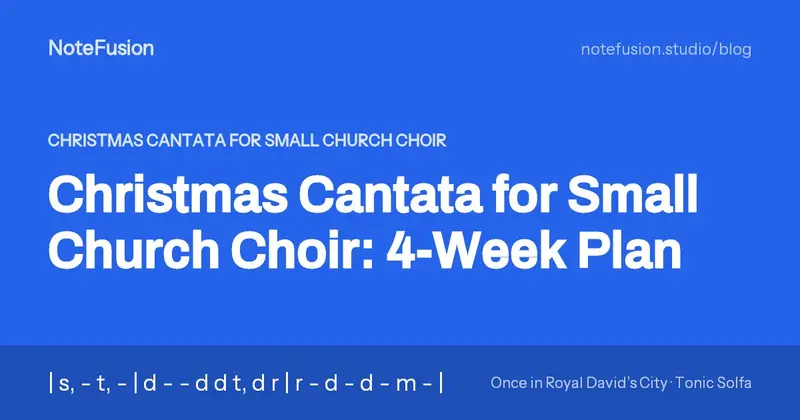
When December arrives and your choir consists of six dedicated volunteers, the grand multi-movement Christmas cantata from the catalogue feels entirely out of reach. But a lack of numbers does not mean you cannot present a moving service of song. You can build a wonderful christmas cantata for small church choir by combining familiar public-domain carols with brief scripture readings, keeping most verses in unison and adding simple harmonies only where your voices feel secure.
Over the years, I have found that small choirs shine brightest when arrangements are uncluttered. By choosing carols with comfortable ranges, distributing clear Tonic Solfa sheets, and following a steady four-week timeline, your singers will walk into Sunday service with absolute confidence. Here is how to plan, rehearse and deliver a memorable Christmas presentation without needing a cathedral-sized ensemble.
Structure Your Cantata Around Readings and Carols
A successful service of song does not require newly composed narration or complex choral recitatives. Instead, divide the Christmas story into four short movements—Prophecy, Annunciation, Nativity and Adoration—and alternate a spoken Bible reading with one or two well-known carols. This structure gives your choir built-in vocal rests and keeps the congregation engaged in the narrative.
Start the service with an Advent expectation theme, move to the shepherds, and conclude with joyful praise. You can explore traditional carols in the Christmas hymns collection to pick pieces that fit your theological theme. When you write out the order of service, ensure the key relationships between adjacent carols flow reasonably well on the keyboard without jarring tempo changes.
Got a recording? Get it in solfa →
Choose Unison and Part Singing Wisely
When your choir has limited numbers, forcing every verse into four-part SATB harmony creates strain and exposes weak sections. The secret to a rich choral sound is strategic part-singing: sing the opening verses in unison, then open up into parts for the final verse or refrain.
For instance, start the first verse of a familiar carol together as a single voice, letting the blend settle. On the second verse, let the sopranos carry the tune while altos and the lower voices take supporting lines. You can practice inner parts using resources like how to sing alto in Christmas carols so your singers never drift back to the main tune.
| s,Once-t,in- | droy---daldDa-t,_dvid’sr_ | rcit--dy-dStood-ma- |
Notice how the opening notes of Once in Royal David’s City sit comfortably within a standard vocal range, making it ideal for a unison start before harmony is introduced.
Keep Keys Friendly for Tired Voices
December is a busy month for church musicians, and your singers' vocal cords will be tired from extra services and caroling in cold weather. Avoid carols that sit too high for your sopranos or drag your basses down into the floorboards. Most standard hymn books print carols in keys that suit large organs rather than small human voices.
If a carol feels too high, use NoteFusion at /app to transpose the melody into a more comfortable key. A lower key protects vocal health, keeps the choir from going flat, and ensures the congregation can join in effortlessly during congregational verses. For more guidance on finding the right pitch, read how to choose the right key for your choir.
| sSi---llentsnight,- | m_----- | sho---llysnight,- | m_----- |
You can also find the full solfa arrangement for Silent Night to print and share with your singers for home practice.
Balance Your Sections with Few Men
Almost every small choir faces an imbalance: plenty of sopranos and altos, but only one or two tenors and basses. Rather than hunting for four-part arrangements that demand robust tenor sections, embrace a flexible three-part texture consisting of Soprano, Alto, and a combined Men's line.
When your men sing together on the lower octave, they provide a sturdy anchor for the entire ensemble. You can also have the men take the melody on a verse while the upper voices hum a chordal accompaniment. For practical strategies on managing limited male voices, consult Christmas carols for small choir with few men.
Follow a 4-Week Rehearsal Timeline
Cramming a cantata into a single week leads to panic and rushed performances. Instead, pace your preparation across four weeks so that every phrase settles comfortably into the singers' muscle memory:
- Week 1: Select your five carols and scripture readers. Hand out Tonic Solfa sheets for the first two carols and run through the melody lines in unison.
- Week 2: Introduce the remaining carols. Assign inner parts to altos and basses, drilling difficult intervals slowly using how to read Tonic Solfa.
- Week 3: Combine the readings with the music. Practice the transitions between spoken word and singing so there are no awkward silences.
- Week 4: Polish dynamics, balance the blend in your small space, and do a complete run-through from start to finish.
| sAn--mgels- | d'from-sthe-m'realms--r'of | d'glo--sry,-lWing-lyour- |
Share Practice Materials Between Rehearsals
Volunteers miss rehearsals due to illness, family commitments, or winter weather. If a singer misses a week, they often fall behind and feel too discouraged to attend the performance. You can solve this by sending digital practice aids straight to their phones.
Export your Tonic Solfa sheets or generate slow playback tracks, and share them via WhatsApp using the advice in how to share choir sheet music on WhatsApp. When choristers can listen to their specific part at home during the week, your weekly rehearsals spend less time note-hunting and more time making beautiful music together.
If you need to quickly prepare custom arrangements or check the solfa notation for a specific carol your small choir wants to sing this December, try NoteFusion at /app.
Frequently asked questions
How do you do a Christmas cantata with a small choir?
Build a service of song using five or six familiar public-domain carols linked by scripture readings. Keep the verses in unison or two parts so small sections do not strain, and reserve four-part harmony for the refrains.
Which carols are easiest for a small church choir?
Carols with steady rhythms and moderate ranges like Once in Royal David’s City and Silent Night work best. They are easy to learn from choir rehearsal tracks and sound full even with only a handful of voices.
How many rehearsals do you need for a mini cantata?
Four weekly rehearsals are plenty if you hand out clear Tonic Solfa sheets early. Dedicate the first two weeks to learning the notes and the final two weeks to polishing dynamics and transitions between readings.
How do you handle missing tenor or bass voices?
Combine your tenors and basses into a single men’s lower line, or let the men sing the melody an octave lower while sopranos carry the harmony above. You can also consult the choir director checklist to balance your sections before Sunday.