How to Sing Two Notes on One Syllable in Solfa
Learn how to sing two notes on one syllable in Tonic Solfa. Master slurs, melismas, and rhythmic alignment using clear church hymn examples.
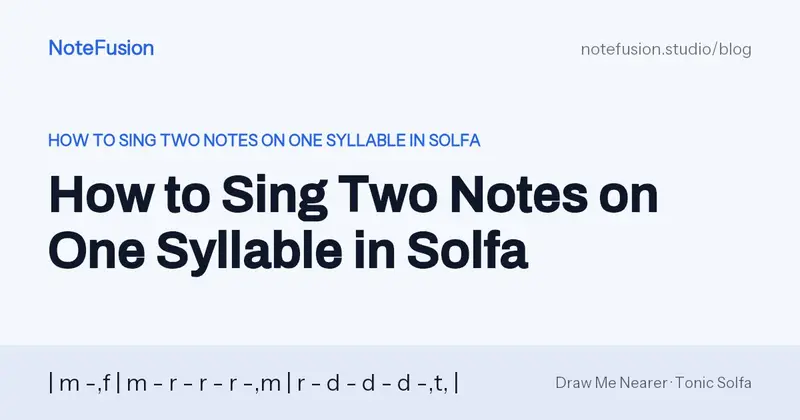
When you face a line where a single word stretches across a musical phrase, your choir often hesitates, stumbles, or gasps for breath halfway through. Knowing how to sing two notes on one syllable in solfa is an essential skill for any church musician, whether you are tackling a lively carol or a steady Sunday hymn. If you have ever wondered how the notes line up when a syllable carries several pitches, the secret lies in reading the spacing, understanding slurs in tonic solfa, and keeping your vowels steady across the notes.
In standard Tonic Solfa notation, when two or more notes share a single beat or syllable without a new word or syllable under them, they are sung on that exact same vowel sound. This technique, often called a melisma in tonic solfa, brings color and movement to church music. Let us look at how this works in practice by examining real examples from our hymn repertoire and practicing them together.
Spotting a One-Word Two-Notes Hymn
The most common place to find a one word two notes hymn is right at the start of a phrase or during an uplifting refrain. When a lyric is held over a change in pitch, the printed solfa places multiple syllable-free notes under the same beat divisions. For instance, look at how the notes move without changing the text in this opening phrase:
| mI-,fam | mThine,-rO-rLord,-rI-,mhave | rheard-dThy-dvoice,-dAnd-,t,it |
Notice how the notes flow from one pitch to the next while the voice sustains the vowel. When your choir encounters this, my advice is always to practice the notes on a neutral vowel first—like 'lah' or 'doo'—before adding the actual words. This ensures everyone's pitch matches before tongue movements get in the way.
Got a recording? Get it in solfa →
How Slurs Work in Tonic Solfa
When reading staff notation alongside your solfa sheets, slurs tell you that the composer wants a smooth, connected line. In Tonic Solfa, we achieve this by keeping the breath flowing and the vocal cords steady. If you need a refresher on how these symbols appear in older books, take a look at how to read hymn book solfa for a complete breakdown of spacing and punctuation.
When two notes happen on one syllable, you must never double-strike the consonant. If the word is 'grace', you sing the first note on 'gr-a-' and gently glide into the second note without pronouncing a second 'c'. Here is a classic example of smooth vocal movement where notes flow naturally within the measure:
| l,Grace!- | d'tis-da-t,charm--t,ing- | l,sound!-----dHar-- |
| dmo--dnious-rto-rthe- |
Drilling the Gloria and Melismas
Longer stretches of notes on a single vowel—true melismas—frequently appear in festive carols. The most famous example in church music is the cascading 'Gloria' found in Christmas repertoire. To get your section leaders ready for these runs, you can study the detailed breakdown in the Angels We Have Heard on High Gloria solfa guide and listen to the original movement via the full arrangement at /hymns/angels-we-have-heard-on-high.
When a soprano section sees a long string of notes on 'O', they tend to rush the middle notes and run out of breath before the cadence. To fix this, clap a steady underlying pulse while speaking the solfa names in rhythm at half-tempo:
| mAn--mgels-mwe-shave- | sheard--fonmhigh--- |
Keeping Vowels Pure Across Multiple Pitches
The biggest enemy of a clean multi-note syllable is vowel modification. As singers move higher or lower, they naturally tend to change the shape of their mouth, turning an 'ah' into an 'uh' or an 'ee' into an 'ih'. To keep your sound unified, apply the practical advice found in choir diction tips for clear words during your sectional warm-ups.
When your sopranos and altos sing multiple notes on one vowel, have them place a hand gently on their chest to feel that the resonance remains centered. If the chest drops or the jaw tightens on the second note, the pitch will inevitably wobble or go flat.
Step-by-Step Rehearsal Drill for Tonight
Whenever your choir hits a passage with multiple notes per syllable, use this four-step drill at your next rehearsal:
- Speak the rhythm in time, tapping the beats on your knees without singing any pitches.
- Sing the solfa syllables slowly, ensuring every note gets its exact duration.
- Replace the solfa syllables with a single vowel sound (like 'oh' or 'ah') while maintaining the exact same vocal shape.
- Add the hymn word back in, making sure the consonant happens only at the very beginning of the first note.
Try this method on simpler hymns first before moving on to complex festival anthems. If you are ever unsure how a tricky sequence should sound, you can paste a song link into NoteFusion to hear the melody played back slowly or transposed into a comfortable key for your singers.
Frequently asked questions
What does a slur mean in Tonic Solfa?
A slur or tie beneath or above notes in Tonic Solfa indicates that multiple notes must be sung on a single syllable without taking a new breath or re-articulating the vowel.
How do you count melismas in a church choir?
When a single word stretches across several notes, keep your beat steady using colons and dots while keeping the vowel pure until the final pitch changes.
Is a melisma different from a held note?
Yes. A held note uses a dash to prolong a single pitch, whereas a melisma moves through different scale steps while keeping the exact same syllable.
How do I teach a complex run to volunteers?
Break the run down into pairs of notes, practice them slowly with hand signs, and then stitch them back together before adding the text.